Analysis of an opening: 'Angus, Thongs and Perfect Snogging'

Creation of enigma
There is creation of enigma in the first shot because we do not know why she is dressed up as an olive and how other people will react to her and what she is wearing. We also see a friction that is created by the protagonist and antagonist and the audience want to know how and why there is friction between the characters. 

Introduction to characters
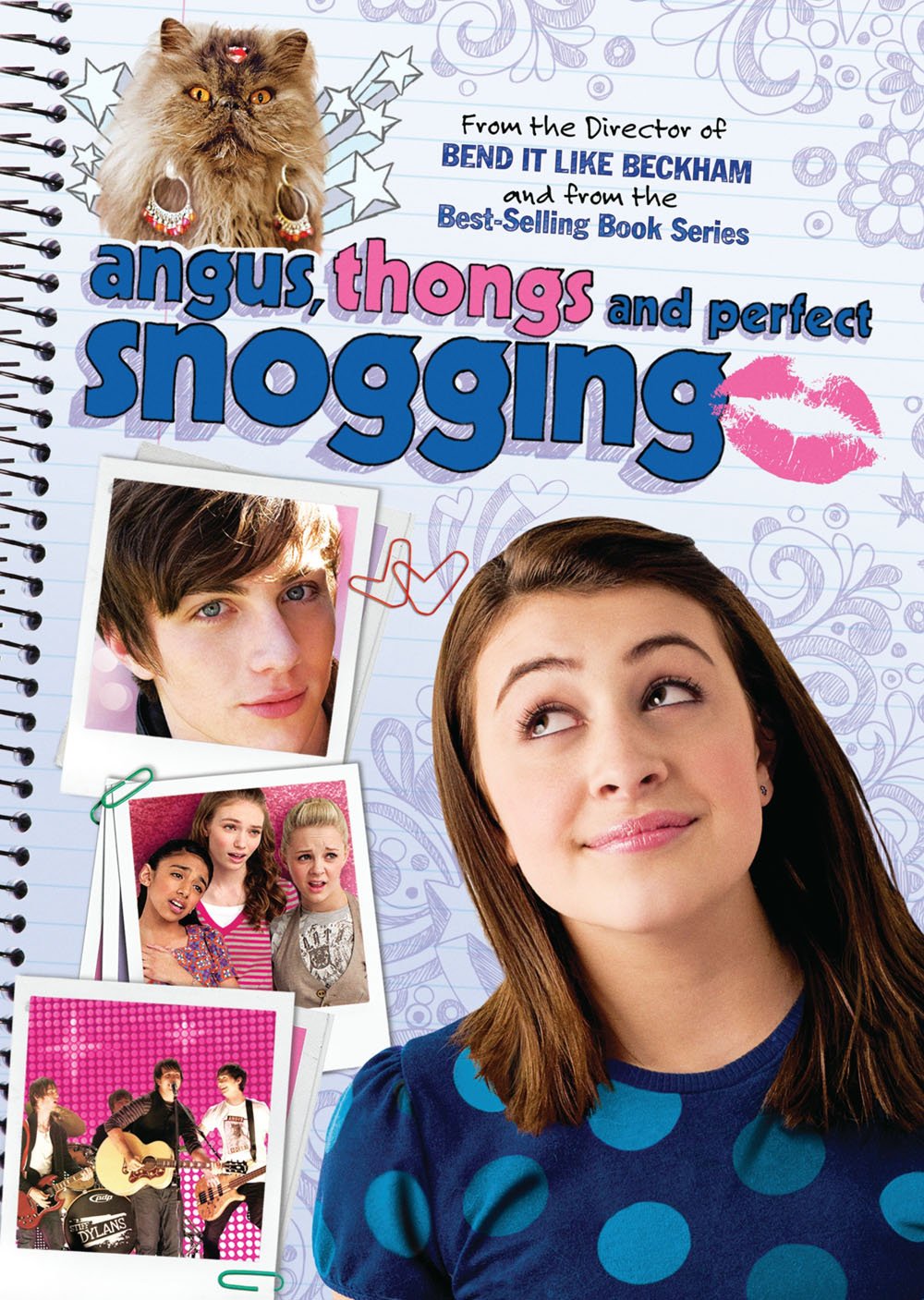
The first character that we are introduced to is the main female protagonist, Georgia, she is the first characters voice that we hear and immediately we recognise her as the protagonist. The first shot that we see is a medium shot of her father, with her walking alongside the car. Although we recognise her as the protagonist, we see that she is overshadowed by her dad implying that her parents dominate over her and her social life as we recognise that she is going to a party. The antagonist is later introduced when Georgia enters the party, after gasps from the people at the party we see that she initiates fits of laughter from them but is also the only person to confront Georgia. When confronting her she clearly insults her which presents her as a 'bitchy' character.The protagonists best friends are then later introduced, we see them as being outcasts as they are all located into one small corner of the room, they also are show to let down their best friend. 

Setting up plot
The plot of the film is set up by the binary opposites of Georgia and Lindsay. Georgia is suggested to be the clumsy, embarrassing girl who would do anything to be popular suggested by the diegetic dialogue which shows that she wants to make an entrance to the party and has tried very hard to perfect her costume. Lindsay on the other hand, looks like she has not put much effort into what she is wearing and still looks better. The shots that we see of her are when she is surrounded by her friends suggesting that she is popular and Georgia clearly is not. The shots that we see of Georgia in the introduction are mostly of her being isolated from others or in confrontations with them. 

Pace and rhythm
At first, the pace of the introduction is quite slow, there is not use of much editing until Georgia gets to the party. This suggests that everything is calm and there is focus on the character but we as the audience expect something to happen.After the party from the non-diegetic music we can hear that the pace of the introduction is quite fast paced, there is a variety of shots used and we get a sense of urgency, that the protagonist wants to get away. The pace is increased because we see shots of her running.

Mood and tone
From the non-diegetic music we can assume that the mood of the introduction is quite happy and upbeat however this contrasts with what we learn from the dialogue and how we believe that the protagonist is feeling. This suggests that there will be themes of confusion in the film.

Analysis of an opening: 'Wild Child'

Creation of enigma
At the beginning of the film, we do not know why the calendar on the date is so important and we want to find out, we later do find out in the rest of the opening.There is enigma created because we do not know why Poppy is giving away her dads girlfriends clothes, we assume that they must have a bad relationship and therefore want to know why. The introduction of her father creates enigma because we can clearly see that they have bad relationship from the beginning and want to know why they have a bad relationship.

Introduction to characters


Poppy the main character is 
introduced through the use of camera, a zoom in is used on her whilst she is sleeping which creates an angelic persona for her. However, the expletive is the first word we hear from her, this clearly contradicts the persona that was created for her. We can clearly see that Poppy is popular because she is always placed in the centre of the frame, we see all the friends that she has and assume that she is popular because of it. Poppy's sister, Molly is later introduced, the characters are always pictured together in the frame which suggests that they have a close relationship. Molly is also shown to know her sister well because she knows that she will do something bad. The father is the last character to be introduced, a low angle is used, showing the audience looking up to him suggesting that he has control and power over Poppy.

Setting up plot
The plot is set up by the introduction of themes such as rebellion and bad relationships with family. These themes are themes that are prevalent in many teen romantic-comedy films as well as the lives of teenagers themselves. The bad relationships suggest that the protagonist and her parents must be binary opposites and this would drive th eplot of the film. 

Pace and rhythm
The pace and rhythm at the beginning is fairly slow, the music and camera shots create a slow rhythm, this is used to directly contrast with what is going to happen next which is Poppy running out of bed ad downstairs. The music then dramatically changes to much more upbeat and menacing soundtrack. This directly reflects the personality of the protagonist as being quite mischievous and troublesome.  

Mood and tone
At the beginning of the film, there is a calm and serene atmosphere created by the non-diegetic music which creates a calm tone. The mood then changes to a much more fun and crazy mood which is reflective of the teen genre . This fun mood is later disrupted when Poppy's father is introduced. 

Analysis of an opening:'10 Things I Hate About You'

Creation of enigma
Enigma is created by the two contrasting groups of characters, we do not know why there is friction between the groups of people and why the female protagonist is the way she is and also why she does things such as rip down the poster. 

Introduction to characters
The main character is introduced through the music, we do not hear any speech from her which is significant because usually in teen romantic-comedies a voice-over is used.This suggests to us that this character will differ from the typical characters in rom-coms. Also, as a voice-over is not used it suggests to us that the character does in fact have a voice and is able to express her self clearly without the need for words, which we see when she rips down the poster. The medium shot of her in the car on her own highlights the fact that she is an outcast but she is still shown to be confident because she directly looks at the other girls in the other car that are all together and speeds in front of the other car.. The clothes that she is wearing which are dark reflect both the rebellious music but also her personality and contrast with everybody else in the school. 

Setting up plot
The plot is set up by the binary opposites, this is represented by the music. Because there were binary opposites presented in the beginning of the film then we know that this will be significant throughout and will be continually emphasised in the film. When the female character rips down the poster we also see this that will be something that will be important which is the prom. 

Pace and rhythm 
The pace is slow and then increases as the different music is introduced. The use of straight cuts also increases the pace and makes us feel like what the main character is feeling. 

Mood and tone
The mood at the beginning is fairly calm and girly as music that is listened to by teenage girls is played, this  is then contrasted with the music played by the main character which then fills the scene and creates a more angry mood and tone which reflects what the character is feeling at the time and her personality. 


Codes and conventions of teen romantic-comedies

From our own knowledge and individual research we identified key codes and conventions that are identifiable in teen romantic-comedy films. We looked at stock settings and characters, themes, narrative and iconography. For each aspect we found textual evidence from different films to support our claims. 

Stock settings:
  • Parties
  • School
  • Home (usually main characters bedroom) 
  • Park
  • Shops/Town Centres

Stock characters:
  • Female protagonist- Usually a female character, somebody the audience can relate to, an outcast.
  • Male protagonist- Clumsy, somebody who the character sees more of as a 'friend'.
  • Love Interest- Typical dream guy, usually popular and out of the characters league.
  • Best Friend- Provides support for friend, main character might let her down, comic element is added. 
  • Antagonist-Enemy to the protagonist, usually has an interest in dream guy, usually more popular and has a large group of friends.
  • Parents/teachers- Have control over protagonist, cause problems.

Themes:

  • Love 
  • Romance
  • Deceit
  • Finding 'who you are'
  • Sex
  • Happily ever after 
  • Embarrassment
Iconography:
  •  
  • Love hearts
  • Kissing
  • Flowers
  • Chocolate
  • The colours red and pink
  • Mobile phones, internet, laptops

Narrative
  • Main character who is usually an outcast, fancies the 'dream guy' who is  out of her league. 
  • Antagonist usually also fancies the same person.
  • There might also be another male character who loves the main character but is not suspected of doing so. 
  • Fight between antagonist and protagonist.
  • Conflict between dream guy and protagonist; realisation she does not love him but loves other male character.
  • Sometimes the main character will let down the best friend for the guy but they will eventually reconcile.
  • Lives happily ever after.


Examples of teen romantic-comedy films


History of the romantic-comedy genre

The romantic-comedy genre is a hybrid of the romance and comedy genres. The most early depictions of the romantic-comedy genre have been seen in Shakespearean pays such as 'A Midsummer Nights Dream', 'The Taming of the Shrew' and 'Much ado about Nothing'. Many modern romantic-comedy films have been based around similar plots of these 16th century plays. Other ancient Greek comedy plays have incorporated sex and relationships elements into the plays. 

Popularity for the romantic-comedy genre generally declined through the 20th century up to the 60's. After this time the popularity increased due to the change in societies views about sex, relationships and marriage. Romantic-comedies such as 'When Harry met Sally' revived the rom-com genre and paved the way for the modern typical rom-com. From then on in the romantic-comedy has become one of the most popular genres of film at cinemas. Its appeal to a large female audience clearly contributes to its popularity and its predictability providesthe audience with comfort that everything will end up having a 'happily ever after'. Characters in romantic comedy films mirror those that we have in our real lives and allow us to empathise with them. 


Teen romantic-comedies in particular appeal to teenagers. Developed from the 90's onwards it provides comfort for a large female teenage audience in a time when romance and emotions are constantly on their minds. They deal with typical issues in a teenagers life that they will be able to relate to and present the idea that everything will end up great. This would  be a particular worry for teenagers at this time and they are likely to relate to this main issue and plot in the films. 
An introduction to our coursework


To start off our coursework, we looked at the different kinds of research that we would have to conduct to get a clear idea about our target audience and the openings of our film genre. We looked at the two types of research; primary and secondary. We identified what kind of questions we would ask, how we would obtain the research and why we would have to get this research. We decided on two types of research: a questionnaire and a focus group/interviews. By creating a questionnaire we will be able to identify the demographics of our target audience and what they expect in the openings of our chosen genre. Both closed and open questions will be used in our questionnaire to get an idea of who our target audience is and what there opinions of our genre are. Our focus group and interviews will allow us to get a more detailed view of the opinions of our target audience, what they prefer and what they do not like, as well as what they think we should include. By the end of the lesson we decided on the genre of the opening of our film, we decided to create the opening to a teen romantic-comedy film